
Experimental Extraction as a System
Elderberry Anthocyanin Yield

I have a backlog of student assignments and my feedback to them that I mine for what I hope will be interesting forays into understanding a range of herbal product design challenges. In an elderberry experiment students were provided the question they thought they are answering:
What effect do pH and heat have on anthocyanin yield in elderberry (Sambucus nigra)? The structure of the assignment suggests that variables can be isolated, and outcomes directly observed. It assumes that yield is visible, that color reflects concentration, and that separation reflects identity.
Elderberry anthocyanins are primarily cyanidin glycosides, including cyanidin-3-glucoside and related derivatives (Wu et al., 2005). Glycosylation increases polarity and water solubility but also increases susceptibility to hydrolysis and structural transformation.
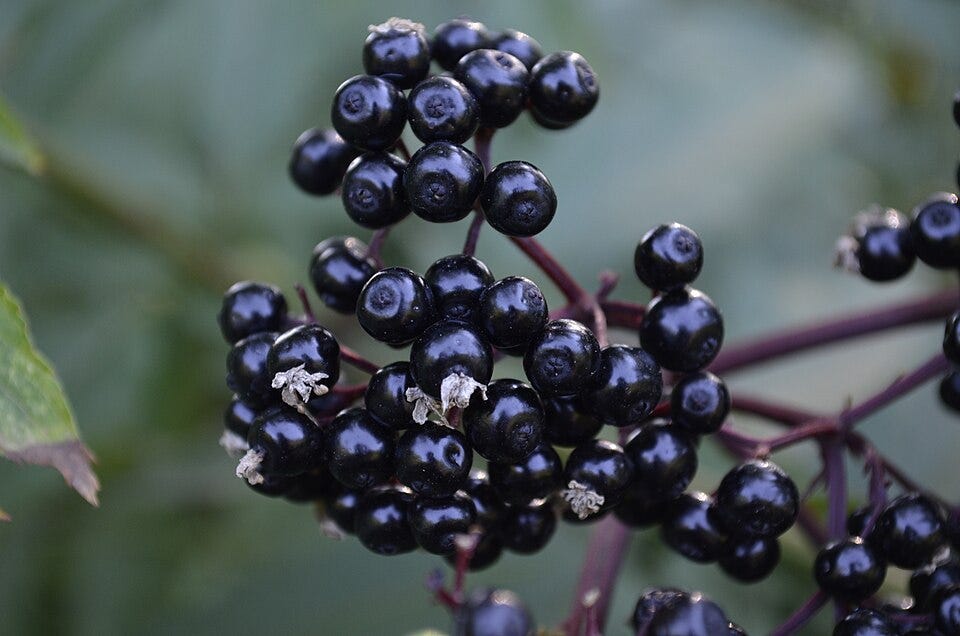
Students work with kitchen-safe solvents, pH strips, visual comparison, and paper chromatography. The material comes as part of a kit. Trying to keep the cost down impacts the level of sophistication in equipment, not necessarily their thinking. At the same time, they are asked to manage grind size, extraction time, agitation, and solvent selection.
They observed that acidified extracts are red and that basic extracts are pale or blue. This appears to track with expectations about extraction efficiency. However, the underlying chemistry is more complex. Anthocyanins exist in a pH-dependent equilibrium among multiple structural forms. At low pH, the flavylium cation dominates and produces red coloration. As pH increases, hydration reactions convert this form into a colorless carbinol pseudo-base. This intermediate can undergo ring opening to form a chalcone, while parallel proton transfer reactions generate quinonoidal bases and their corresponding anionic forms (Castañeda-Ovando et al., 2009; Brouillard & Dubois, 1977; Turturică et al., 2015).
Color reflects the distribution of these forms, not the total number of anthocyanin molecules present. A darker extract may contain more anthocyanin, or it may contain the same amount in a structural state that absorbs visible light more strongly. A lighter extract may reflect degradation, or it may reflect a shift in equilibrium toward colorless forms. Although color appears to measure yield. It does not.
Paper chromatography adds an additional data set to interpret. The original method used solvents that would not be appropriate for home kitchen use, so a green method was constructed that was not optimized. The goal was to separate compounds based on polarity and interaction with the stationary and mobile phases. However, it lacked the resolution required for identification or quantification. Multiple compounds may have co-migrated, and single bands may have represented mixtures (Krüger et al., 2015; Ignat et al., 2011). Extract application thickness, drying time between applications, solvent front consistency, and environmental conditions all influenced results.
Stability Is Not the Same as Yield
Anthocyanins are most stable under acidic conditions, typically near pH 3, where the flavylium cation is favored and solubility in water is enhanced (Coutinho et al., 2015; Bąkowska-Barczak, 2005). This makes sense for storage in the plant, but creates the appearance that acid improves extraction.
The acid stabilizes a particular structural form. Stability and solubility increase together under some conditions, but they are not identical processes. Increasing acidity does not indefinitely improve stability. Stronger acids increase proton availability but can also destabilize the molecule depending on concentration and solvent environment. Additional variables such as light, oxygen, metal ions, enzyme activity, and molecular substitution patterns further influence stability (Castañeda-Ovando et al., 2009; Turturică et al., 2015).
Solvent modifies this balance. Water favors extraction of glycosylated anthocyanins due to polarity. Ethanol reduces dielectric constant and alters hydrogen bonding, changing both solubility and acid–base behavior (Dai & Mumper, 2010; Tena & Asuero, 2022). Glycosides remain more soluble in water, while aglycones show greater affinity for alcohol (Pérez-Gregorio et al., 2010). Extraction conditions that favor stability do not necessarily maximize yield. So, product development requires tradeoffs.
What Heat Actually Changes
Students observed that heated extracts often appeared darker initially. They interpreted the result as improved extraction. However, heat introduces multiple effects simultaneously. Increasing temperature enhances diffusion and mass transfer, improving extraction efficiency. At the same time, it accelerates degradation pathways that reduce anthocyanin stability. These degradation reactions are temperature-dependent and often follow first-order kinetics, with rates increasing rapidly as temperature rises (Patras et al., 2010; Sadilova et al., 2007; West & Mauer, 2013).
Temperature also changes the solvent itself. The ionization constant of water increases with temperature, leading to greater dissociation into hydrogen and hydroxide ions. This alters the effective pH of the system during extraction, even in the absence of added acid or base (Bandura & Lvov, 2006).
Ethanol behaves differently. With a higher pKa than water, it dissociates less readily, which alters proton availability in mixed solvent systems. As a result, identical nominal pH values do not correspond to identical chemical environments across solvents (Bordwell 1988; Marcus, 2009). Heat changes reaction rates, chemical equilibria, and solvent behavior at the same time.
Heat also impacts endogenous enzymes that might brown the extract. Polyphenol oxidases (PPOs) present in plant tissues contributes to oxidative reactions. These enzymes do not directly degrade anthocyanins. They require cofactors such as caffeic acid or chlorogenic acid to participate in coupled oxidation pathways (Mayer, 2006; Yoruk & Marshall, 2003; Subramanian et al., 1999).
Their activity depends on temperature and time. Mild heat may reduce activity. Higher temperatures can denature the enzyme, but only with sufficient exposure. Under typical extraction conditions, partial activity may persist (Patras et al., 2010). Ascorbic acid can suppress oxidation by acting as a reducing agent, providing an alternative to thermal control.
The presence of PPO introduces an additional pathway, but its contribution cannot be isolated using the methods in this assignment. Its effects must be inferred.
Optimal Yield
The research literature does not converge on a single optimal extraction condition. Acidified systems near pH 3 are generally favorable for stability and apparent yield, but solvent composition, temperature, and extraction ratio all influence outcomes (Ruenroengklin et al., 2008; Hutabarat et al., 2019; Patras et al., 2010; Tena & Asuero, 2022).
Some studies report improved extraction with hydroalcoholic systems (Salamon et al., 2015; Backes et al., 2018; Albuquerque et al., 2020), while others report destabilization under ethanolic conditions (Tseng et al., 2006). Moderate temperature ranges may improve extraction efficiency, but the optimal window varies by matrix and method (Demirdöven et al., 2015; Backes et al., 2018; Albuquerque et al., 2020).
Liquid-to-solid ratios influence efficiency but interact with pH, solvent, and temperature (Xavier et al., 2008; Hutabarat et al., 2019). Environmental conditions such as light and storage further influence anthocyanin stability (Laleh et al., 2006; Walkowiak-Tomczak et al., 2016). These contradictions reflect the structure of the system. They are not errors to be resolved. They are constraints to be understood.
Yield, in this system, cannot be directly observed in this assignment. A more accurate representation of yield in this system would be extraction into solution minus chemical degradation minus enzymatic oxidation. This is not a measured equation. It is a conceptual model used to interpret competing processes. Each term is influenced by multiple variables, and none can be independently measured under the conditions of the assignment.
Why the Assignment Is Designed This Way
The ambiguity is intentional. Measurement is limited. Variables are coupled. Students are required to distinguish observation from mechanism and mechanism from inference. They must recognize that color is a proxy, that separation is not identification, and that multiple mechanisms can produce the same observable outcome. This aligns with research on learning in ill-structured environments, where productive struggle and model construction lead to deeper understanding (Kapur, 2008; Schwartz & Martin, 2004). The assignment creates the conditions for this process but does not guarantee its outcome.
The process encourages students to recognize coupled variables, distinguish proxy from direct measurement, separate observation from interpretation, and construct models of what they understand in the moment. They also learn to operate within bounded uncertainty, where multiple explanations remain plausible but are constrained by known chemistry.
If they had access to a robust analytical lab setting, students might be able to resolve several important questions surrounding elderberry product development:
a. How does cold extraction alter the balance between stability and yield?
b. How do acidified hydroalcoholic systems behave relative to water-only systems?
c. Does the full plant matrix, including proteins and lipids, stabilize anthocyanins during extraction?
d. How do polymerized anthocyanins differ functionally from monomeric forms?
References
1. Albuquerque, B. R., Pinela, J., Barros, L., Oliveira, M. B. P. P., & Ferreira, I. C. F. R. (2020). Anthocyanin-rich extract of jabuticaba epicarp as a natural colorant. Food Chemistry, 316, 126364. https://doi.org/10.1016/j.foodchem.2020.126364
2. Backes, E., Pereira, C., Barros, L., Prieto, M. A., Genena, A. K., Barreiro, M. F., & Ferreira, I. C. F. R. (2018). Recovery of anthocyanins from Ficus carica. Food Research International, 113, 197–209. https://doi.org/10.1016/j.foodres.2018.07.016
3. Bąkowska-Barczak, A. (2005). Acylated anthocyanins as stable food colorants. Polish Journal of Food and Nutrition Sciences, 14, 107–116.
4. Bandura, A. V., & Lvov, S. N. (2006). The ionization constant of water over wide ranges of temperature and density. Journal of Physical and Chemical Reference Data, 35(1), 15–30. https://doi.org/10.1063/1.1928231
5. Bordwell, F. G. (1988). Equilibrium acidities in dimethyl sulfoxide solution. Accounts of Chemical Research, 21(12), 456–463. https://doi.org/10.1021/ar00156a004
6. Brouillard, R., & Dubois, J. E. (1977). Structural transformations of anthocyanins. Journal of the American Chemical Society, 99, 1359–1364. https://doi.org/10.1021/ja00447a032
7. Castañeda-Ovando, A., Pacheco-Hernández, M. L., Páez-Hernández, M. E., Rodríguez, J. A., & Galán-Vidal, C. A. (2009). Chemical studies of anthocyanins: A review. Food Chemistry, 113(4), 859–871. https://doi.org/10.1016/j.foodchem.2008.09.001
8. Coutinho, I. B., Freitas, A., Maçanita, A. L., & Lima, J. C. (2015). Acid–base equilibrium of cyanidin-3-glucoside. Food Chemistry, 172, 476–480. https://doi.org/10.1016/j.foodchem.2014.09.060
9. Dai, J., & Mumper, R. J. (2010). Plant phenolics. Molecules, 15, 7313–7352. https://doi.org/10.3390/molecules15107313
10. Demirdöven, A., Özdoğan, K., & Erdoğan-Tokatli, K. (2015). Extraction of anthocyanins from red cabbage by ultrasonic and conventional methods: Optimization and evaluation. Journal of Food Biochemistry, 39(5), 491–500. https://doi.org/10.1111/jfbc.12153
11. Hutabarat, R. P., Xiao, X.-D., Wu, H., Wang, J., Li, D.-J., & Huang, W.-Y. (2019). Identification of anthocyanins and optimization of their extraction from rabbiteye blueberry (Vaccinium ashei) fruits in Nanjing. Journal of Food Quality, 2019, Article 6806790, 1–10. https://doi.org/10.1155/2019/6806790
12. Ignat, I., Volf, I., & Popa, V. I. (2011). Polyphenol characterization methods. Food Chemistry, 126, 1821–1835. https://doi.org/10.1016/j.foodchem.2010.12.026
13. Kapur, M. (2008). Productive failure. Cognition and Instruction, 26, 379–424. https://doi.org/10.1080/07370000802212669
14. Krüger, S., Mirgos, M., & Morlock, G. E. (2015). Effect-directed analysis of fresh and dried elderberry (Sambucus nigra L.) via hyphenated planar chromatography. Journal of Chromatography A, 1426, 209–219. https://doi.org/10.1016/j.chroma.2015.11.021
15. Laleh, G. H., et al. (2006). Stability of anthocyanins. Pakistan Journal of Nutrition, 5, 90–92.
16. Marcus, Y. (2009). Effect of ions on the structure of water: Structure making and breaking. Chemical Reviews, 109(3), 1346–1370. https://doi.org/10.1021/cr8003828
17. Mayer, A. M. (2006). Polyphenol oxidases. Phytochemistry, 67, 2318–2331. https://doi.org/10.1016/j.phytochem.2006.08.006
18. Patras, A., Brunton, N. P., O’Donnell, C., & Tiwari, B. K. (2010). Thermal degradation of anthocyanins. Trends in Food Science & Technology, 21, 3–11. https://doi.org/10.1016/j.tifs.2009.07.004
19. Pérez-Gregorio, R. M., García-Falcón, M. S., Simal-Gándara, J., Rodrigues, A. S., & Almeida, D. P. F. (2010). Identification and quantification of flavonoids in traditional cultivars of red and white onions. Journal of Food Composition and Analysis, 23(6), 592–598. https://doi.org/10.1016/j.jfca.2009.08.013
20. Ruenroengklin, N., Zhong, J., Duan, X., Yang, B., Li, J., & Jiang, Y. (2008). Effects of various temperatures and pH values on the extraction yield of phenolics from litchi fruit pericarp tissue and the antioxidant activity of the extracted anthocyanins. International Journal of Molecular Sciences, 9(7), 1333–1341. https://doi.org/10.3390/ijms9071333
21. Sadilova, E., Stintzing, F. C., & Carle, R. (2007). Thermal degradation of anthocyanins and its impact on color and in vitro antioxidant capacity. Journal of Food Science, 72(8), C409–C417. https://doi.org/10.1111/j.1750-3841.2007.00460.x
22. Salamon, I., Mariychuk, R., & Grulova, D. (2015). Extraction of anthocyanins. Acta Horticulturae. https://doi.org/10.17660/ActaHortic.2015.1061.6
23. Schwartz, D. L., & Martin, T. (2004). Learning through invention. Cognition and Instruction, 22, 129–184. https://doi.org/10.1207/s1532690xci2202_1
24. Subramanian, N., Venkatesh, P., Ganguli, S., & Sinkar, V. P. (1999). Role of polyphenol oxidase and peroxidase in the generation of black tea theaflavins. Journal of Agricultural and Food Chemistry, 47(7), 2571–2578. https://doi.org/10.1021/jf981042y
25. Tena, N., & Asuero, A. G. (2022). Anthocyanin extraction methods. Antioxidants, 11, 286. https://doi.org/10.3390/antiox11020286
26. Tseng, K.-C., Chang, H.-M., & Wu, J. S.-B. (2006). Degradation kinetics of anthocyanin in ethanolic solutions. Journal of Food Processing and Preservation, 30(5), 503–514. https://doi.org/10.1111/j.1745-4549.2006.00083.x
27. Turturică, M., Oancea, A. M., Râpeanu, G., & Bahrim, G. (2015). Anthocyanins: Naturally occurring fruit pigments with functional properties. Annals of the University Dunarea de Jos of Galati, Fascicle VI: Food Technology, 39(1), 9–24.
28. Walkowiak-Tomczak, D., et al. (2016). Color stability of elderberry juice. Acta Scientiarum Polonorum Technologia Alimentaria, 15, 299–309. https://doi.org/10.17306/J.AFS.2016.3.29
29. West, M. E., & Mauer, L. J. (2013). Anthocyanin stability. Journal of Agricultural and Food Chemistry, 61, 4169–4179. https://doi.org/10.1021/jf400608g
30. Wu, X., Gu, L., Prior, R. L., & McKay, S. (2005). Characterization of anthocyanins and proanthocyanidins in some cultivars of Ribes, Aronia, and Sambucus and their antioxidant capacity. Journal of Agricultural and Food Chemistry, 52(26), 7846–7856. https://doi.org/10.1021/jf0486850
31. Xavier, M. F., Lopes, T. J., Quadri, M. G. N., & Quadri, M. B. (2008). Extraction optimization. Brazilian Archives of Biology and Technology, 51. https://doi.org/10.1590/S1516-89132008000100018
32. Yoruk, R., & Marshall, M. R. (2003). Physicochemical properties and function of plant polyphenol oxidase: A review. Journal of Food Biochemistry, 27(5), 361–422. https://doi.org/10.1111/j.1745-4514.2003.tb00289.x