
Effective Phytochemical Variance
Ratio Structure and Clinical Endpoints

Phytoequivalence refers to the determination that two herbal extracts are sufficiently similar in chemical composition to justify inference of comparable clinical performance for a defined endpoint in a defined population (Pace & Martinelli, 2022). This concept is extract-specific rather than species-level. It assumes that clinical inference depends on compositional similarity to a reference extract that has demonstrated efficacy. My question focuses on understanding allowable phytochemical variance, since that’s expected, and the likelihood of an equivalent clinical endpoint. How much variability can exist without loss of efficacy? My analysis centers on the internal ratio architecture of extracts.
Ginseng: Fatigue Endpoints and the Limits of Aggregate Metrics
Two human fatigue trials often cited in discussions of ginseng efficacy differ more in material form and extraction than in nominal dose. Those differences materially affect how compositional variance might be interpreted.
Barton et al. (2013) evaluated 2000 mg per day of Panax quinquefolius in cancer survivors with persistent fatigue. The intervention consisted of encapsulated Wisconsin-grown whole root powder administered as 1000 mg twice daily. The product was not a solvent extract and was not standardized to a fixed ginsenoside percentage beyond post hoc assay reporting. The authors noted that material used in an earlier pilot study contained approximately 5 percent total ginsenosides, whereas the crop used in the phase III trial contained approximately 3 percent total ginsenosides (Barton et al., 2013). Clinical benefit was observed in the latter dose.
Whole root powder preserves the native matrix, including polysaccharides, minor phenolics, proteins, and the full saponin spectrum without solvent enrichment bias. Dissolution kinetics, microbial metabolism, and exposure profiles differ from those of concentrated extracts. Twice-daily dosing further alters pharmacokinetic exposure by smoothing peak–trough variation relative to single daily administration.
Kim et al. (2013), in contrast, studied a different species, Panax ginseng C.A. Meyer, in patients with idiopathic chronic fatigue using a 20 percent ethanol extract at single dose of 1000 mg and 2000 mg daily. This preparation is chemically distinct from powdered root. Ethanol extraction preferentially enriches moderately polar ginsenosides and reduces high-molecular-weight polysaccharides and other matrix components. The study quantified individual ginsenosides by HPLC, allowing analysis of phytochemical subclass distribution. Improvements were observed primarily in mental fatigue measures (Kim et al., 2013).
Study differences are multidimensional – species, clinical populations, dosing, extraction class and form. Even if total ginsenoside percentages were similar, the internal balance among protopanaxadiol and protopanaxatriol subclasses, the presence or absence of polysaccharides, and the pharmacokinetic consequences of dosing frequency would not be equivalent.
Total ginsenosides functions as an aggregate metric. It compresses structurally and pharmacologically distinct saponins into a single scale. Two preparations each containing 3 percent total ginsenosides may differ substantially in Rb1:Rg1 balance, subclass dominance, and matrix composition. In Barton et al. (2013), the comparison between 5 percent and 3 percent total ginsenosides was not randomized and does not establish a lower efficacy boundary. It shows only that benefit was observed under specific conditions with a crop assayed at approximately 3 percent. In Kim et al. (2013), individual ginsenoside disclosure makes ratio-based analysis possible, but the trial does not define tolerance margins or test compositional gradients.
Both studies demonstrate that clinical signals can be observed within a specific range of variance. Neither isolates extraction method, internal ratio structure, or dosing frequency as independent variables. Consequently, the two trials should not be interpreted as interchangeable demonstrations of ginseng efficacy but as evaluations of chemically and pharmacokinetically distinct preparations. The absence of explicit extraction harmonization, ratio drift testing, and pharmacokinetic profiling limits inference about how much compositional variance can occur without loss of clinical endpoint.
Meta-analytic evaluations of ginseng for fatigue reinforce the complexity of this problem. A meta-analysis by Bach et al. (2016) reported modest overall effects on fatigue and physical performance but emphasized heterogeneity across trials. A more recent systematic review and meta-analysis by Li et al. (2023) similarly documented variability in effect size estimates. Such heterogeneity reflects differences in species, extraction methods, ginsenoside standardization, fatigue scales, and population characteristics. When pooled statistically, these compositional and methodological dimensions are reduced to a single effect size estimate. This pooling does not resolve the question of allowable phytochemical variance. It confirms that efficacy signals exist within certain compositional classes but does not define invariance zones.
This uncertainty around process is not limited to fatigue treatments. Barton et al. (2013) discussed how ginsenosides have been shown in human cell-based systems to interact with estrogen receptor pathways, suggesting that relative enrichment of ginsenoside subclasses could influence endocrine function. Immunologic endpoints further complicate this picture. Acute respiratory infection trials have emphasized polysaccharide-rich extracts, which are less dependent on total ginsenoside concentration (Predy et al., 2005; McElhaney et al., 2004).
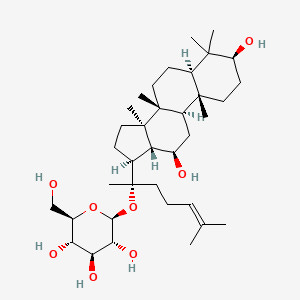
Emerging evidence also implicates the gut microbiome as a mediator of ginseng effects. In a randomized, placebo-controlled trial of American ginseng, Bell et al. (2022) incorporated in vitro analyses suggesting modulation of gut microbial composition. Ginsenosides are metabolized by intestinal bacteria to compounds such as compound K (Figure 1), which may possess distinct biological activity. If microbial transformation acts as a transfer function between upstream compositional ratios and downstream metabolite exposure, then internal balance among ginsenosides may influence endpoint expression indirectly. Human trials have not yet mapped compositional ratio drift to metabolite profiles and fatigue outcomes simultaneously. This gap highlights the limits of current evidence.
Ginkgo biloba: Standardized Ranges and the Problem of Scalar Pooling
Ginkgo biloba extracts used in clinical research are typically standardized to 22–27 percent flavonoid glycosides and 5–7 percent terpene lactones, with ginkgolic acids below 5 ppm (European Medicines Agency, 2014; United States Pharmacopeia, 2019). Dementia symptom trials demonstrating benefit have used extracts within this compositional class (Le Bars et al., 1997; Herrschaft et al., 2012). These ranges define identity and quality specifications associated with the evidence base. They are not validated biological thresholds.
The challenge arises when meta-analytic approaches aggregate trials across populations and preparations. A pooled effect size reduces chemical differences among extracts into a single average result. Each extract can be conceptualized as a vector defined by flavonol subclass distribution, ginkgolide balance, bilobalide proportion, and minor constituents. Statistical pooling assumes implicit equivalence within specification, yet internal ratio differences may exist within the 22–27 percent and 5–7 percent ranges. Combining results into a single summary value hides the underlying chemical differences among the extracts.
The large Ginkgo Evaluation of Memory Study (GEMS) trial did not demonstrate prevention of dementia despite use of standardized extract (DeKosky et al., 2008). This outcome underscores endpoint specificity and the danger of extrapolating pooled symptomatic efficacy to preventive claims. Meta-analytic interpretation in phytochemical contexts can inadvertently suggest interchangeability across extracts that meet broad specification windows without demonstrating that internal ratio architectures are functionally equivalent.
Batch-to-batch compositional variance is rarely disclosed in clinical publications. Authors typically report compliance with standardized extract specifications but do not publish detailed lot-level analyses. This practice reflects regulatory sufficiency, proprietary considerations, and journal norms rather than demonstration of invariance. Consequently, the literature cannot specify how much variance within accepted ranges can occur without altering clinical response.
Adulteration, Marker Inflation, and the Role of Ratios
Reliance on single-marker compliance is vulnerable to manipulation. Flavonoid content can be increased by adding isolated flavonoids. Terpene lactone content can be selectively enriched. Absolute marker percentages therefore do not guarantee natural matrix integrity.
Internal ratio structures provide stronger diagnostic resolution. The balance among individual flavonol aglycones and among ginkgolide subclasses is more difficult to engineer artificially. Untargeted LC–MS fingerprinting combined with chemometric similarity analysis can detect deviations not evident in single-marker assays (Czigle et al., 2018; Pace & Martinelli, 2022). A robust phytoequivalence framework therefore integrates bounded quantitative ranges, internal ratio constraints, fingerprint similarity, and safety marker ceilings.
Nabiximols: Prospective Ratio Engineering as Contrast
Nabiximols, an oromucosal botanical extract, is standardized to deliver approximately a 1:1 ratio of delta-9-tetrahydrocannabinol and cannabidiol (Überall, 2020). The extract is produced from defined chemovars under controlled manufacturing conditions and dispensed in standardized doses per spray. Clinical trials have demonstrated efficacy in subsets of patients with multiple sclerosis spasticity (Überall, 2020).
The contrast with ginkgo is instructive. In ginkgo, compositional ranges were established historically and then associated with efficacy evidence. In nabiximols, the principal-component ratio was defined prospectively as a design parameter. Ratio is not merely descriptive but central to pharmacologic strategy. The product constrains its core ratio at the manufacturing stage and preserves it across batches.
This difference represents a shift from retrospective specification to prospective ratio engineering. It suggests that internal balance among principal constituents may be a more critical determinant of endpoint behavior than absolute concentration within modest limits. Demonstrating tolerance margins would require controlled gradient-ratio trials in humans. Such data remain limited in the public domain.
Integrative Principles and the Research Gap
Looking across ginseng, ginkgo, and nabiximols, several general lessons appear. Ratios among key constituents are harder to manipulate than single marker compounds. These ratios may also reflect how compounds interact with each other to shape the biological response. Defining the clinical endpoint first is essential. Without it, chemical comparisons lack context. In practice, a workable system for phytoequivalence combines two controls - acceptable ranges for multiple constituents and limits on the ratios among them.
References
1. Bach, H. V., Kim, J., Myung, S. K., & Cho, Y. A. (2016). Efficacy of ginseng supplements on fatigue and physical performance: A meta-analysis. Journal of Korean Medical Science, 31(12), 1879–1886. https://doi.org/10.3346/jkms.2016.31.12.1879
2. Barton, D. L., Liu, H., Dakhil, S. R., Linquist, B., Sloan, J. A., Nichols, C. R., McGinn, T. W., Stella, P. J., Seeger, G. R., Sood, A., & Loprinzi, C. L. (2013). Wisconsin ginseng (Panax quinquefolius) to improve cancer-related fatigue: A randomized, double-blind trial, N07C2. Journal of the National Cancer Institute, 105(16), 1230–1238. https://doi.org/10.1093/jnci/djt181
3. Bell, L., Lamport, D. J., Butler, L. T., Williams, C. M., & Scholey, A. (2022). A randomized, placebo-controlled trial investigating the acute and chronic benefits of American ginseng on mood and cognition. European Journal of Nutrition, 61, 2345–2361. https://doi.org/10.1007/s00394-021-02654-5
4. Czigle, S., Mersch-Sundermann, V., & Krenn, L. (2018). Ginkgo biloba food supplements on the European market. Planta Medica, 84. https://doi.org/10.1055/a-0581-5203
5. DeKosky, S. T., Williamson, J. D., Fitzpatrick, A. L., et al. (2008). Ginkgo biloba for prevention of dementia: A randomized controlled trial. JAMA, 300(19), 2253–2262. https://doi.org/10.1001/jama.2008.683
6. European Medicines Agency. (2014). Assessment report on Ginkgo biloba L., folium (EMA/HMPC/321095/2012). No DOI available.
7. Herrschaft, H., Nacu, A., Likhachev, S., Sholomov, I., Hoerr, R., & Schlaefke, S. (2012). Ginkgo biloba extract EGb 761 in dementia with neuropsychiatric features. Journal of Psychiatric Research, 46(6), 716–723. https://doi.org/10.1016/j.jpsychires.2012.03.003
8. Kim, H. G., Cho, J. H., Yoo, S. R., et al. (2013). Antifatigue effects of Panax ginseng C.A. Meyer. PLOS ONE, 8(4), e61271. https://doi.org/10.1371/journal.pone.0061271
9. Le Bars, P. L., Katz, M. M., Berman, N., et al. (1997). A placebo-controlled, double-blind, randomized trial of an extract of Ginkgo biloba for dementia. JAMA, 278(16), 1327–1332. https://doi.org/10.1001/jama.278.16.1327
10. Li, X., Yang, M., Zhang, Y. L., et al. (2023). Ginseng and ginseng herbal formulas for symptomatic management of fatigue: A systematic review and meta-analysis. Journal of Integrative and Complementary Medicine, 29(8), 468–482. https://doi.org/10.1089/jicm.2022.0532
11. McElhaney, J. E., Gravenstein, S., Cole, S. K., et al. (2004). A placebo-controlled trial of a proprietary extract of North American ginseng to prevent acute respiratory illness. Journal of the American Geriatrics Society, 52(1), 13–19. https://doi.org/10.1111/j.1532-5415.2004.52004.x
12. Pace, R., & Martinelli, E. M. (2022). The phytoequivalence of herbal extracts: A critical evaluation. Fitoterapia, 162, 105262. https://doi.org/10.1016/j.fitote.2022.105262
13. Predy, G. N., Goel, V., Lovlin, R., et al. (2005). Efficacy of an extract of North American ginseng for preventing upper respiratory tract infections. CMAJ, 173(9), 1043–1048. https://doi.org/10.1503/cmaj.1041470
14. Shishtar, E., Sievenpiper, J. L., Djedovic, V., et al. (2014). The effect of ginseng on glycemic control: A systematic review and meta-analysis. PLOS ONE, 9(9), e107391. https://doi.org/10.1371/journal.pone.0107391
15. United States Pharmacopeia. (2019). Powdered Ginkgo Extract (Dietary Supplement Monograph). USP–NF. No DOI available.
16. Überall, M. A. (2020). A review of scientific evidence for THC:CBD oromucosal spray (nabiximols). Journal of Pain Research, 13, 399–410. https://doi.org/10.2147/JPR.S240931